How to Improve Brand Visibility in AI Search: A Practical Playbook
How to improve brand visibility in AI search: fix entity basics, write answer-first content, earn third-party mentions and correct wrong AI answers.

Short answer
To improve brand visibility in AI search, make your business easy for AI systems to identify and trust. Use identical facts about your business everywhere, publish answer-first pages with specific, citable detail, earn genuine mentions on the reviews, directories and publications AI answers cite, fix wrong information at its source, and measure progress with a fixed prompt set over several months.
Key takeaways
- AI assistants recommend brands they can identify confidently and see described consistently by several independent sources.
- Entity basics (one business description, consistent profiles, Organization schema with sameAs links) are the fastest, cheapest improvement for most businesses.
- Third-party presence on the review sites, directories, publications and communities that AI answers cite usually decides whether a brand is recommended at all.
- Wrong AI answers are fixed at the source: find the outdated page or listing the answer draws on and correct it, rather than arguing with the chatbot.
- Expect technical and entity fixes to show within weeks to a couple of months, and reputation-driven gains over several months; no one can guarantee placement.
In this article (12 sections)
- 1Why AI assistants mention some brands and not others
- 2Step 0: Make sure AI systems can read your site (Read)
- 3Step 1: Fix your entity basics (Know)
- 4Step 2: Publish answer-first content buyers actually ask for (Recommend)
- 5Step 3: Be honest in comparison and "best X" content (Recommend)
- 6Step 4: Build third-party presence where AI answers look (Know)
- 7Step 5: Publish original data and specific expertise (Recommend)
- 8Step 6: Correct wrong AI answers at the source (Know)
- 9Can a smaller brand get recommended over category leaders?
- 10Cited but not named: when AI uses your page without crediting you
- 11How to check your brand's visibility in AI search
- 12How long does it take to improve brand visibility in AI search?
"How do I get my business to show up when people ask ChatGPT for recommendations?" It is a question I hear constantly from founders, and it is a fair one. Buyers now ask AI assistants for shortlists, and if you are not on them, you are not in the running.
This playbook covers how to improve brand visibility in AI search in the order I work through it: making your site readable by AI, entity basics, answer-first content, honest comparison content, third-party presence, original data, fact consistency, fixing wrong answers, competing with category leaders, getting named when you are cited, checking where you stand, and realistic timelines.
Why AI assistants mention some brands and not others
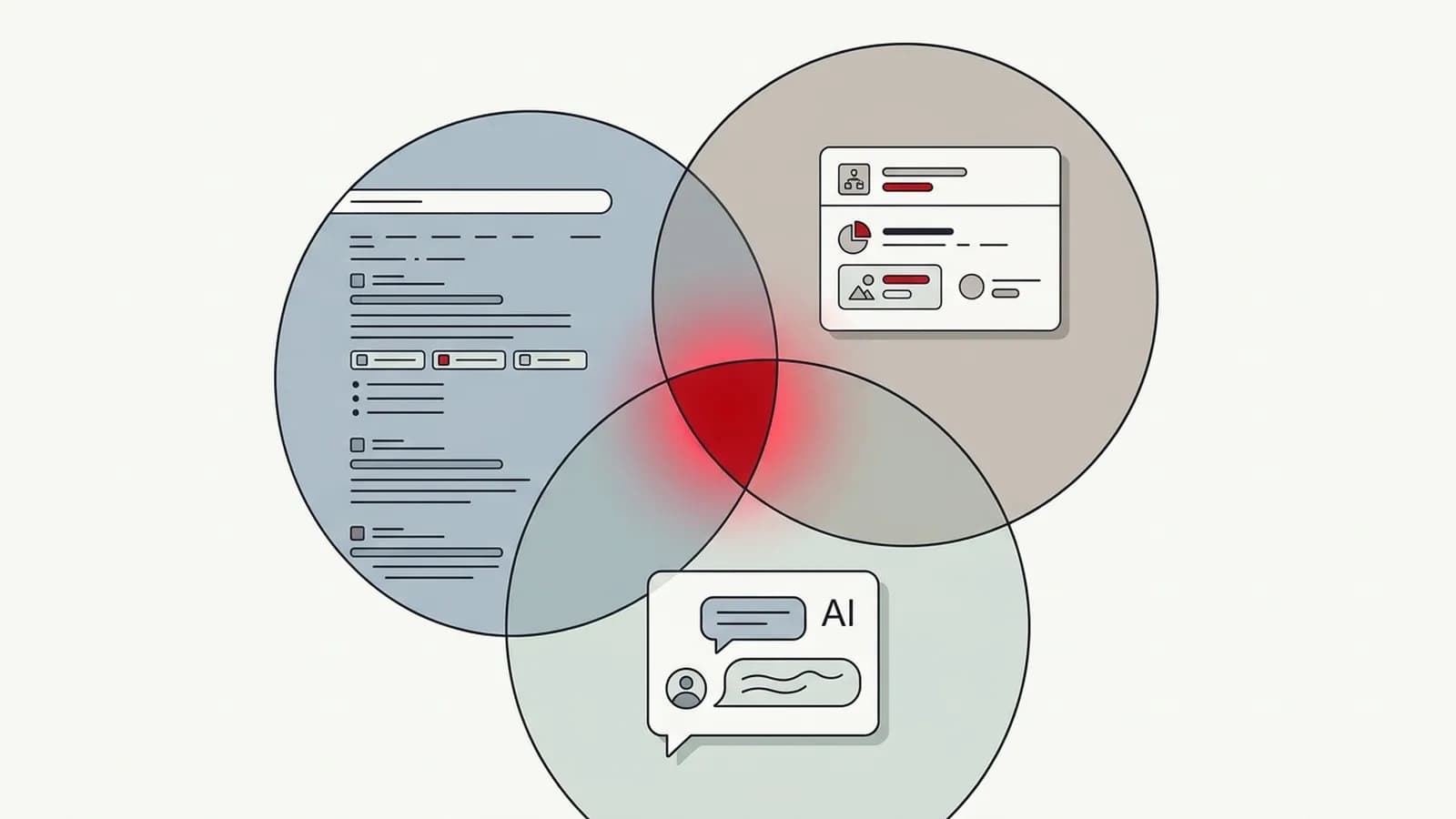
AI assistants recommend brands they can identify with confidence and see described consistently by several independent sources. When ChatGPT, Gemini, Perplexity or Google's AI Overviews answer "who are the best providers of X?", they draw on pages found through search and on what the model learned from the wider web.
Brands that get mentioned by AI search engines tend to have three things in common:
- A clear entity: it is obvious what the business is, what it does, and for whom.
- Corroboration: multiple independent sources say similar things about it.
- Relevant, citable content: pages that directly answer the questions buyers ask.
Brands that get missed usually fail on at least one. The playbook below addresses each.
Step 0: Make sure AI systems can read your site (Read)
None of the later steps matter if AI crawlers cannot fetch and understand your pages. This is the first thing I check.
- Allow the search crawlers. In robots.txt, allow OAI-SearchBot (ChatGPT search) and PerplexityBot (Perplexity). You can still block training crawlers such as GPTBot separately if you prefer.
- Check your host and CDN defaults. Some website builders, hosts and CDNs now block AI bots by default or with a single setting, and some of those settings block search crawlers along with training crawlers. Check which user agents are covered.
- Put key facts in the HTML. What you do, who you serve, where you operate, prices and product details should be in the page's text when it loads, not only added by JavaScript.
That last point is about how your site is rendered. With server-side rendering (SSR) or static HTML, the server sends a page that already contains the text, so any crawler can read it straight away. With client-side rendering (CSR), the server sends a mostly empty page and the content only appears after JavaScript runs in the browser. Many AI crawlers don't execute JavaScript, so on a CSR site they may see little or nothing. If your site is built that way, make sure at least your key pages and facts are rendered on the server.
Step 1: Fix your entity basics (Know)
If you only do one thing from this guide on how to improve brand visibility in AI search, do this. It is the cheapest work and, in the AI visibility audits I run, the most commonly neglected.
- Write one canonical description: business name, a one-sentence summary, category, location or markets served, and three to five key facts. Get it agreed internally.
- Use it everywhere: website About page, homepage, LinkedIn, Google Business Profile, industry directories, marketplace listings, founder and author bios.
- Add structured data: Organization (or Person, for a consultant) schema with
sameAslinks to your official profiles. - Remove contradictions: old brand names, retired services, previous addresses, and inconsistent founding details.
If your website says "digital marketing consultancy", LinkedIn says "software company" and a directory says "web design agency", an AI system has no stable picture of what you are.
Step 2: Publish answer-first content buyers actually ask for (Recommend)
AI answers are built from pages that answer questions directly. For each priority topic, open with a short, direct answer, then support it with detail, examples and structure.
Focus on the prompts where recommendations happen: "best X for Y", "X vs Y", "how much does X cost", "how to choose X", and "X for [industry]". Put comparisons in tables. Keep claims specific; "we deliver results" is uncitable, while a named process with clear steps is not.
Step 3: Be honest in comparison and "best X" content (Recommend)
Comparison pages matter because they match high-intent prompts. They also invite abuse. The common tactic of publishing a "best 10 providers" list with yourself at number one, and no stated criteria, does sometimes get picked up by AI answers, which is why it has spread. It is still a poor bet. Buyers discount these lists, and search engines treat content made mainly to manipulate rankings as spam, so the gain is fragile. A comparison page with stated criteria and genuine alternatives is the version that lasts, and it is what I help clients build.
What works better:
- State your criteria openly and apply them consistently.
- Include genuine competitors and say where they are the better choice.
- Disclose that it is your own page.
- Keep pricing and feature details current.
An honest comparison is more useful to buyers, and more likely to be treated as a credible source.
Step 4: Build third-party presence where AI answers look (Know)
This is usually the step that separates brands that are recommended from those that are not. Run your category and comparison prompts, tally the cited sources, and you will see the handful of sites that shape your category's answers.
| Source type | What good presence looks like |
|---|---|
| Review platforms | Steady flow of genuine reviews with responses |
| Directories and marketplaces | Complete, consistent, current listings |
| Industry publications | Expert commentary, bylined articles, interviews |
| Communities and forums | Helpful participation under a real identity |
| Editorial "best of" lists | Inclusion earned through outreach and a strong product |
| Podcasts and events | Talks and episodes that get written up and linked |
When you do get PR coverage, a guest article or a directory profile, check how your brand is described, not only whether you get a link: AI answers draw on what sources say about you, whether or not they link to you.
Do not plant fake reviews or forum posts. They breach platform rules, get removed, and damage the trust you are trying to build.
Step 5: Publish original data and specific expertise (Recommend)
AI answers need something to cite. Original data (a survey of your customers, anonymised benchmarks from your own operations, a pricing study) gives publications a reason to reference you and gives AI systems a distinctive fact linked to your name.
It need not be large. A clear, well-documented dataset or a named framework that solves a real problem can earn citations for years. What does not work is rewording what everyone else has already said.
Step 6: Correct wrong AI answers at the source (Know)
When an AI assistant says something wrong about you, arguing with it achieves little. Instead:
- Record the wrong claim and the prompts that produce it.
- Check the cited sources, or search for the incorrect fact, to find where it lives.
- Fix it at the source: update your own old pages, correct directory listings, ask publishers to update articles.
- State the correct fact clearly on your own site, in a place that is easy to find and quote.
- Use platform feedback tools where they exist, but do not rely on them alone.
- Re-check over the following cycles, because models and indexes update at different speeds.
Can a smaller brand get recommended over category leaders?
Yes, it can. The condition is clarity: you need to be precise about your positioning and about the topics and prompts you plan to win. Trying to beat a category leader on "best X" is usually the wrong fight.
What makes it possible:
- Positioning clarity. "Accounting software" is a leader's prompt. "Accounting software for small dental practices" is one where a focused brand can be the obvious answer.
- Niche and use-case prompts. Build your prompt set around the specific situations, industries, locations and budgets you serve best, and create pages that answer those questions directly.
- Specific comparisons. Honest "you vs leader" pages that say who each option suits give AI answers a reason to name you for the buyers you fit.
- Third-party mentions in your niche. A few specialist publications, directories and communities that name you for your use case matter more than broad coverage.
- Realistic timelines. Leaders have years of mentions behind them. Expect progress on narrow prompts first, over several months, before broader category questions move.
Cited but not named: when AI uses your page without crediting you
Sometimes an AI answer lists your URL as a source but never mentions your brand, or credits the point to "experts" or a competitor. The model has used your information without connecting it to your name.
It usually happens because:
- The useful fact sits on the page with nothing tying it to your brand, so it gets lifted as a generic statement.
- Your brand is named inconsistently, so the model doesn't recognise one clear entity behind the content.
- Few independent sites name you in that context, so the model has no reason to call you an authority on the topic.
What helps:
- Put your brand name next to your original data and definitions. "In [Brand]'s analysis of…" is harder to separate from the finding than an unattributed sentence.
- Name your company consistently across your site, schema and profiles, using the same canonical description from Step 1.
- Earn outside mentions that name you alongside the topic, so the connection is corroborated by sources other than your own site.
An AI visibility audit shows which prompts cite you without naming you, which is usually the quickest gap to close.
How to check your brand's visibility in AI search
Before and during this work, you need a baseline. I check brand visibility with a fixed set of prompts across three themes: how AI describes your brand, how it compares you with competitors, and whether it recommends you as the answer to a buyer's problem. Each theme has prompts for every stage of the buying journey, from early research to ready to choose.
Run each prompt several times on each platform your buyers use, logged out and set to the buyer's location, and repeat the full set monthly. Record whether you are mentioned, cited, recommended and described accurately, and which sources each answer draws on. A single screenshot proves nothing, because answers change from run to run.
The full method is in how to measure AI search visibility, and if you want to automate some of it, I compare the options in AI visibility tools.
How long does it take to improve brand visibility in AI search?
Here is how I set expectations with clients. These are ranges, not promises; no one can guarantee placement in any AI answer.
| Signal | Action | Effort | Typical time to show |
|---|---|---|---|
| Crawler access | Allow search crawlers such as OAI-SearchBot; check CDN rules | Low | Weeks |
| Entity consistency | One description, updated profiles, schema | Low–medium | Weeks to a couple of months |
| Answer-first content | Restructure priority pages; add comparisons | Medium | One to three months |
| Wrong facts | Trace and correct sources | Medium | Varies by source |
| Third-party presence | Reviews, listings, publications, communities | High, ongoing | Several months |
| Original data | Research, publish, promote | High | Several months |
If you have been working on how to improve brand visibility in AI search for a few weeks and see no change, that is normal. Judge progress against a fixed prompt set over two to three months, using the method in how to measure AI search visibility.
When this work is not the answer
If very few people talk about your business anywhere, optimisation has little to amplify. The priority is then customers, reviews and genuine reputation. And if your pages are not indexed or rank poorly in traditional search, start with SEO; GEO vs SEO vs AEO explains why.
For platform-specific tactics, read how to rank in ChatGPT. If you would like an outside view of where you stand, an AI visibility audit benchmarks you against competitors and prioritises the fixes, and my GEO consulting takes it from there.