B2B SaaS SEO: A Strategy Built for Pipeline
B2B SaaS SEO: bottom-of-funnel pages first, the buying committee, links buyers read, technical SEO for SaaS, pipeline measurement and AI answers.

Short answer
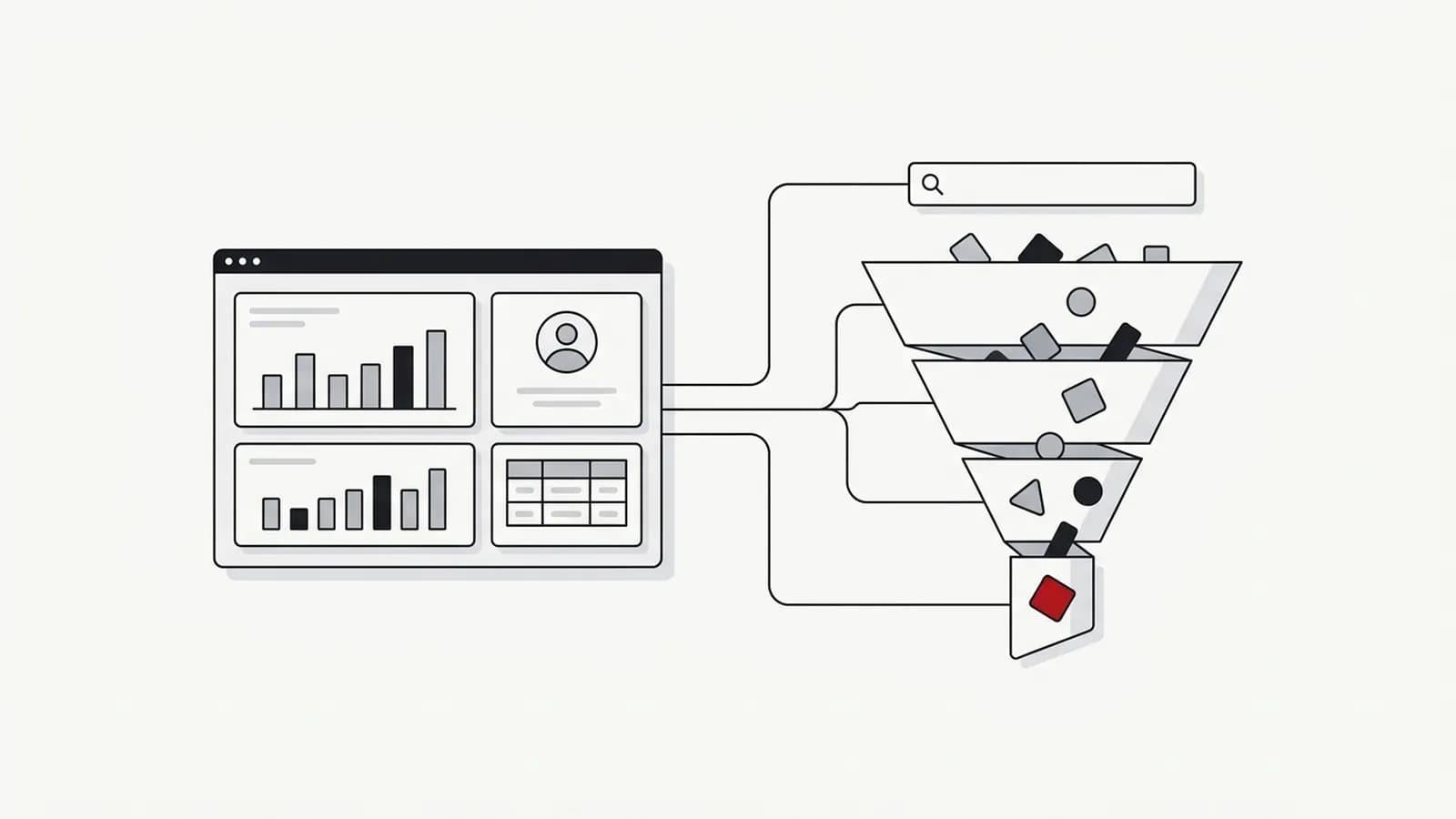
B2B SaaS SEO works best when it starts at the bottom of the funnel: comparison, alternatives, use-case and integration pages that buyers search when they are already evaluating tools. Build these before broad blog content, avoid thin programmatic pages, measure success by pipeline and revenue influenced rather than traffic, and make sure AI assistants can accurately describe your product for 'best X tools' queries.
Key takeaways
- B2B SaaS SEO should start with bottom-of-funnel pages: comparisons, alternatives, use cases and integrations.
- Long, multi-person buying cycles mean SEO influences pipeline across many touchpoints, so measure opportunities and revenue influenced, not just last-click sign-ups.
- Programmatic SEO works only when each page carries unique, useful data; templated pages with swapped names tend to be ignored or not indexed.
- For SaaS SEO, AI answers to 'best X tools' queries are shaped by clear positioning, consistent third-party mentions and indexable product information.
- Product, sales and customer success teams hold the best keyword insight in a B2B company; involve them early.
In this article (10 sections)
- 1Why B2B SaaS SEO is different from B2C
- 2ICP and the buying committee
- 3Start at the bottom of the funnel
- 4Then build the middle and top of the funnel
- 5Programmatic SEO pitfalls for SaaS
- 6Technical SEO for SaaS sites
- 7Authority: links from sites your buyers read
- 8Measure pipeline, not traffic
- 9Win AI answers for "best X tools" queries
- 10When B2B SaaS SEO is not the right bet
B2B SaaS SEO is not consumer SEO with longer articles. The buyer is a committee, the sales cycle runs for months, and a single closed deal can be worth more than a year of consumer traffic. That changes what you build first, how you measure it, and what "working" looks like.
This is the SaaS SEO strategy I would put in front of a founder or head of growth who has been told "just publish more blog posts" and is not seeing pipeline.
Why B2B SaaS SEO is different from B2C
Four things change the game:
- Low volume, high value. A query with 50 searches a month can be worth more than one with 50,000, if it is typed by people with budget.
- Many stakeholders. The person who searches is often not the person who signs. Content has to serve evaluators, users and approvers.
- Long cycles. Someone reads your comparison page in March, books a demo in May and closes in August. Last-click attribution misses most of this.
- Sales-led context. Your sales and success teams know exactly which objections, competitors and integrations come up. That is your keyword research.
The practical consequence is that keyword volume is a weak guide to priority. In B2B SaaS SEO I rank topics by commercial intent first, fit with what sales can close second, and volume third. A tool will happily tell you a broad "what is [category]" query has thousands of searches; it will not tell you that almost none of those searchers have a budget or a buying timeline.
It also means the keyword list is never finished. Every new competitor, integration partner, pricing change or target industry creates new bottom-of-funnel queries. A quarterly session with sales and customer success, reviewing lost deals and common objections, is one of the highest-return habits a SaaS content team can build.
ICP and the buying committee
Start with your ideal customer profile (ICP): the companies that buy, stay and grow. Then map the people inside them, because in B2B SaaS several people search, and each one searches differently.
| Role | What they care about | What they search | Pages that serve them |
|---|---|---|---|
| Who signs | Cost, risk, return | "[category] pricing", "[you] vs [competitor]" | Pricing, comparison, case studies |
| Who evaluates | Fit, integrations, security | "[you] [other tool] integration", "[category] for [industry]" | Integration, use-case, security pages |
| Who uses | Ease of use, daily workflow | "how to [job] in [tool]", "[competitor] alternatives" | Alternatives pages, docs, templates |
Every bottom-of-funnel page should have a clear reader in this table. If a page serves nobody on the buying committee, it is probably a blog post in disguise.
Start at the bottom of the funnel
The most common mistake in SEO for SaaS is starting with top-of-funnel thought leadership. It builds traffic that rarely converts, and leadership loses patience before it compounds. Build the pages buyers search when they are already choosing:
| Page type | Example query pattern | Why it converts | Common mistake |
|---|---|---|---|
| Comparison | "[you] vs [competitor]" | Buyer is shortlisting | One-sided, no honest trade-offs |
| Alternatives | "[competitor] alternatives" | Buyer is unhappy with a rival | Listing only yourself |
| Use case | "[category] for [industry/role]" | Matches a specific job to be done | Generic copy with the industry swapped |
| Integration | "[your tool] [other tool] integration" | Shows fit with existing stack | Thin page with a logo and a button |
| Category / "best" | "best [category] software" | High intent, AI-heavy query | Pure self-promotion |
| Pricing | "[your tool] pricing" | Late-stage evaluation | Hiding pricing or its logic |
Two principles make these pages work. First, be honest: a comparison page that admits where a competitor is stronger is more believable, and buyers check. Second, make them useful: real screenshots, setup steps, limits, and who each option suits.
Then build the middle and top of the funnel
Once bottom-of-funnel pages exist, content further up the funnel has somewhere to send people. Good mid-funnel content for B2B SaaS SEO includes:
- Problem-led guides that show how the job is done, with your product as one route.
- Templates, calculators and checklists that practitioners bookmark and share.
- Original data or benchmarks from your product, where you can publish them.
Internal links should run downward: every guide should point to the relevant use-case, comparison or integration page. Without that, you end up with a popular blog and an invisible product, which is the most common complaint I hear from SaaS founders about SEO.
Programmatic SEO pitfalls for SaaS
Programmatic pages, generated from a database, can work brilliantly for integrations, templates or locations. They also cause some of the worst problems I see in audits.
- Swapped-name pages. "CRM for dentists", "CRM for lawyers" and 200 more with the same copy. Google tends to crawl them, then decline to index them.
- Empty integration pages. A logo, a sentence and a sign-up button, repeated for every app in a marketplace.
- Crawl waste. Thousands of low-value URLs consuming crawl attention that your core pages need.
- Cannibalisation. Programmatic pages competing with hand-written ones for the same query.
The test is simple: would each page be worth publishing if you had to write it by hand? If the unique value is only the name in the H1, do not publish it. My SEO audit checklist covers how to spot these patterns in Search Console.
Technical SEO for SaaS sites
SaaS sites have a few technical problems that most other sites don't:
- Server-render the marketing site. Pages built as a JavaScript app can look fine in a browser and nearly empty to crawlers. Product, pricing, comparison and integration pages should be in the HTML the server sends.
- Make docs and the help centre crawlable. They answer evaluator questions and often rank well. Decide deliberately whether they live in a subfolder or on a subdomain, rather than inheriting whatever the docs tool defaults to.
- Keep the app, staging and preview URLs out of the index. Log-in screens, staging copies and preview deployments regularly end up in Google and compete with the real pages.
- Give changelogs and integration pages unique copy. A changelog entry or integration page with a single line and a logo adds little; one that explains what changed or what the integration does earns its place.
A full SEO audit checks all of this. If you are moving the marketing site to a new framework or domain, plan it as a migration; SEO migration services covers how I run those.
Authority: links from sites your buyers read
Bottom-of-funnel pages still need authority to rank in competitive categories. Start with a competitor gap: which sites link to the competitors that outrank you, and not to you? That list is usually more useful than any outreach database.
Quality matters far more than volume. A handful of links and brand mentions from publications, partners and communities your buyers actually read will do more than hundreds of links from sites nobody visits. In one engagement, an enterprise AI contract-management SaaS platform moved a core category keyword from position 25 to #1 in two months with a focused backlink and brand-mention campaign built on competitor gap analysis; the SaaS link building case study has the detail.
Depending on the engagement, the outreach is done by my team or by your PR team working from the plan. Either way, these links do a second job: they feed what AI systems know about you, because AI answers lean on the same sources your buyers trust.
Measure pipeline, not traffic
"Is SEO working?" in B2B means "is it creating opportunities and revenue?". Traffic and rankings are leading indicators, useful but not the goal.
- Track conversions properly. Demo requests, trials and contact forms as GA4 key events, with the landing page captured.
- Pass source into the CRM. First-touch and landing-page data into HubSpot or Salesforce on the contact record, so organic leads can be followed to opportunities.
- Report influenced pipeline. Opportunities where organic was a touchpoint, not only where it was last click.
- Group by page type. Pipeline from comparison pages versus blog content tells you where to invest next.
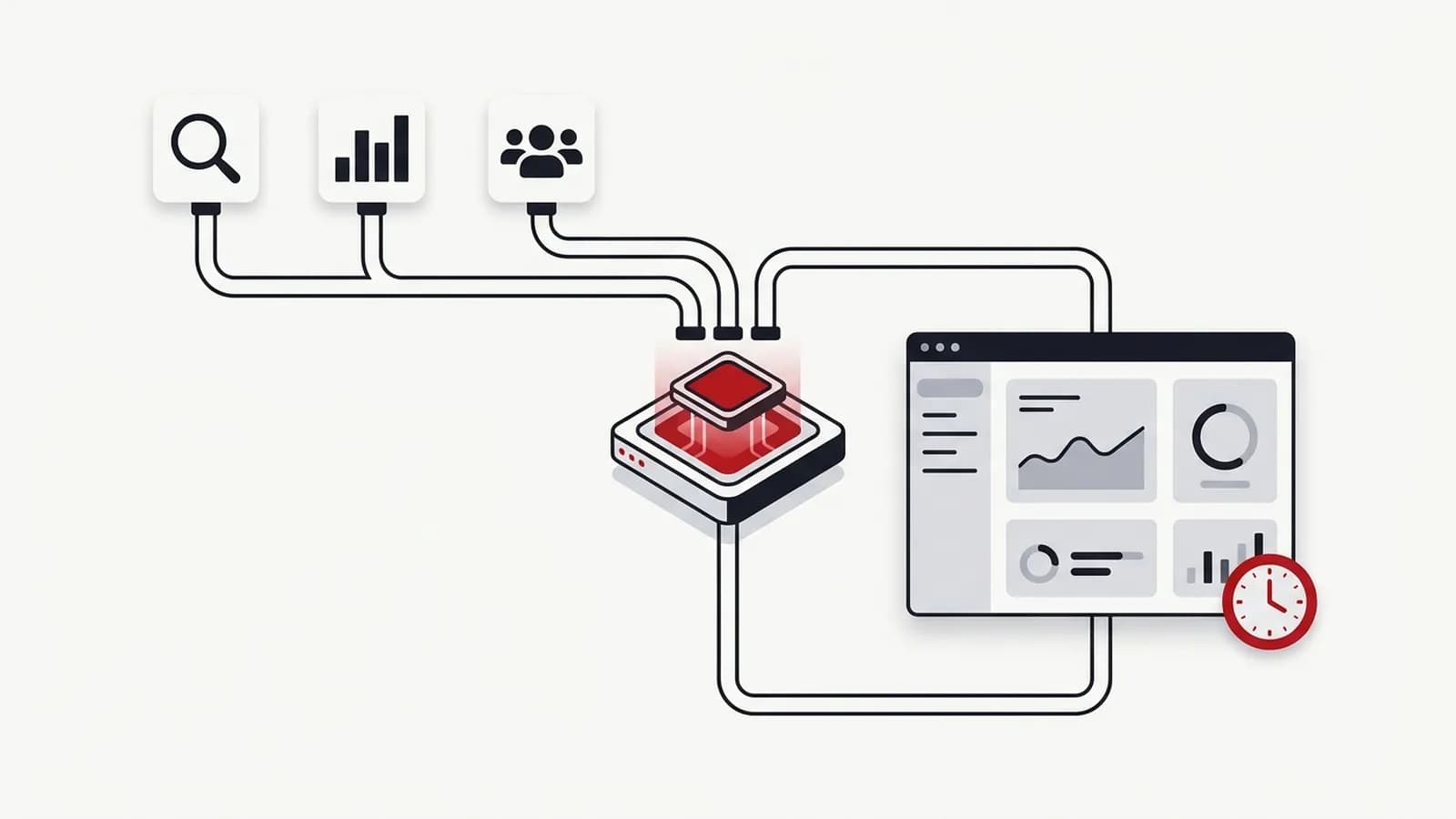
- Automate the report. A Looker Studio dashboard fed by GA4, Search Console and CRM data removes hours of manual work. I cover the build in SEO reporting automation.
In a previous leadership role I automated more than 1,400 hours of manual reporting, the equivalent of about ten team members' workload. The lesson that carried over: if a report takes a day to build, people stop reading it, and SEO loses the argument for budget.
Win AI answers for "best X tools" queries
Buyers increasingly ask ChatGPT, Perplexity or Google's AI Overviews to shortlist tools before they visit any website. Nobody can guarantee placement in those answers, and anyone promising it is overselling. In my engagements, AI-search visibility is part of the SEO work as standard, not an extra. I work through it with three questions I call Read–Know–Recommend:
- Readable by AI (Read). Can a crawler fetch your pages, parse them without running JavaScript, and understand what each one is about? Positioning, pricing model, integrations, security and compliance details belong in plain HTML, not in images or behind scripts. Google states AI features have no special requirements beyond being indexed and eligible for a snippet (Google's AI features documentation).
- Known and corroborated (Know). Does the model hold a confident, consistent picture of who you are, confirmed by sources it already trusts? Review sites, industry roundups, partner directories and credible publications that describe you accurately all help.
- Recommended in the answer (Recommend). When a buyer asks for the best tool in your category, does your name appear, and ahead of your competitors? Clear positioning on who the product is for and what it does differently is what gets you there.
Then measure it: run a fixed set of category prompts regularly and track whether and how you are mentioned. I explain the method in how to measure AI search visibility, and the GEO consultant service covers the full approach.
When B2B SaaS SEO is not the right bet
SEO is not always the answer. If your category has almost no search demand because it is genuinely new, you may need to create demand first through outbound, partnerships or community. If the product changes every quarter, bottom-of-funnel pages go stale fast. And if you need pipeline this quarter, paid search will get there sooner.
If B2B SaaS SEO does fit, I lead these engagements personally with a small specialist team for technical SEO, content and automation. See the SEO consultant service, or read what is SEO consulting to understand how the model works.