MARKETING & AI AUTOMATION
Marketing Automation Consultant for Workflows That Don't Break Quietly
As a marketing automation consultant, I design and build the reporting, data and AI workflows that remove repetitive work from marketing and SEO teams. I'm Ajay Padhy, and I work in n8n, Make, Zapier, Python, Google Apps Script and the OpenAI and Anthropic APIs. In teams I've led, automating reporting saved 1,400+ hours of manual work, roughly 10 team members' workload.
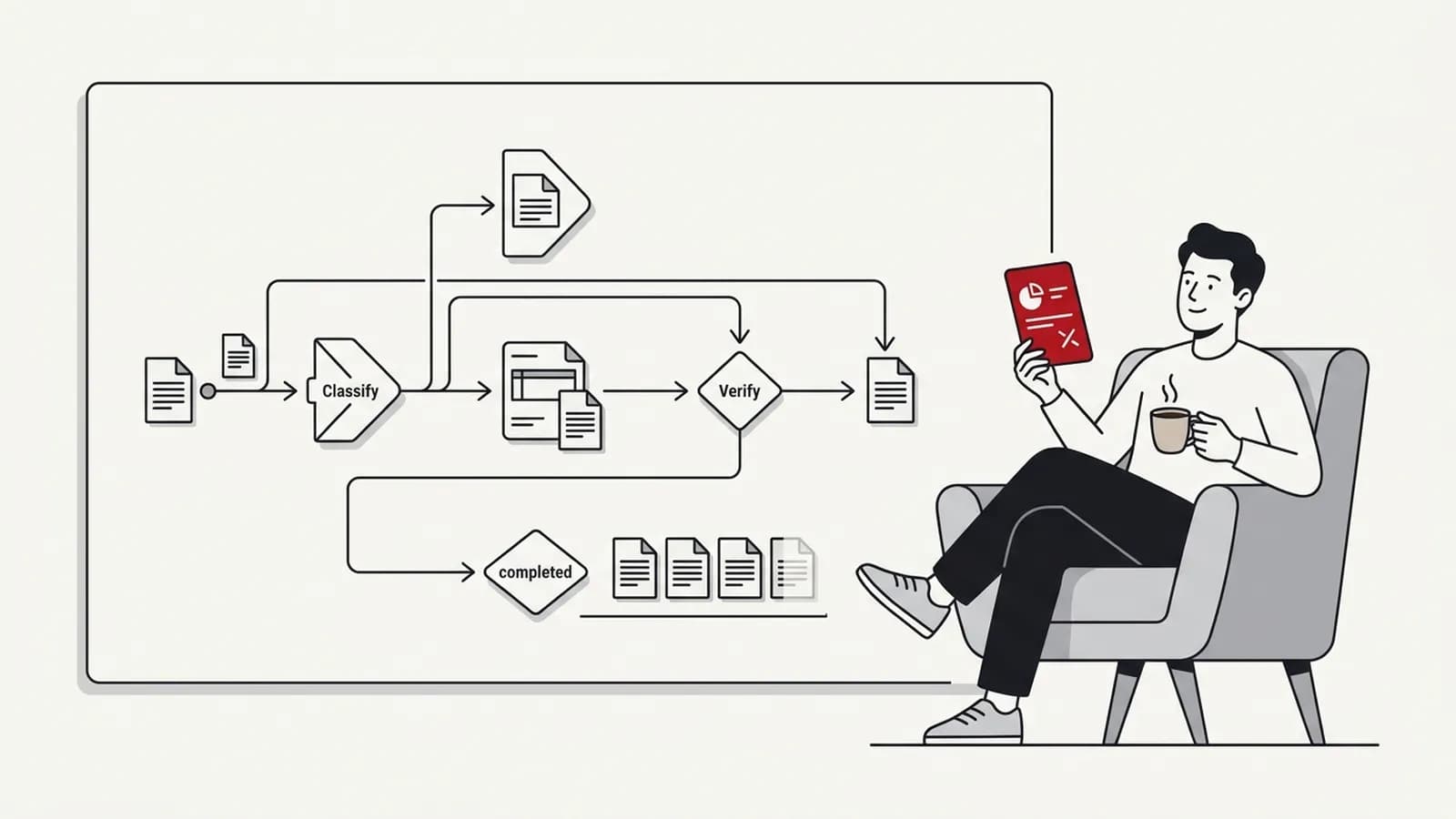
At a glance
- For: marketing teams, SEO teams and agencies losing days each month to reports, copy-paste handoffs and status updates.
- Tool-agnostic: n8n, Make, Zapier or custom Python/Apps Script — chosen by your volume, budget and who will maintain it.
- Built to be owned: every workflow ships with error alerts, a run log, written documentation and a named internal owner.
- AI with guardrails: OpenAI or Anthropic steps are used where output can be checked, with human review before anything client-facing.
- Proof: 1,400+ hours of manual reporting automated in an international operation I led, the equivalent of about 10 people's workload.
OUTCOMES
What this engagement is measured on
Every client's goals are different, and most are a mix. In the first weeks we agree which of these matter to you, record a baseline, and report against it every month. Targets are set after the audit, never promised up front.
Value delivered vs investment
Hours of manual work removed, and the software or headcount cost that saves.
- What we measure
- What the organic results would cost to buy as paid clicks or paid leads (CPC and CPL based value), and hours saved where work is automated.
- What usually moves first
- An agreed baseline and the tracking needed to put a value on results.
- What follows
- A value-to-investment ratio you can track month by month.
See a worked example of the value calculation →
Proof from past work
Leads, sales and revenue
Faster lead handling and reporting that connects marketing to revenue.
- What we measure
- Organic enquiries and leads, conversion rate of key pages, and organic revenue and its share of the total.
- What usually moves first
- Conversion tracking you can trust, and better conversion paths on the pages that already get traffic.
- What follows
- Growth in organic leads, sales and revenue share.
Who this is for
Most marketing teams don't need "more automation". They need three or four specific workflows that remove the work nobody should be doing by hand: pulling the same numbers into the same report every Monday, copying leads from a form into the CRM, chasing status updates across a project tool.
When I led international delivery teams, reporting was the biggest hidden cost — skilled people spending hours assembling data instead of reading it. Automating that is what freed up 1,400+ hours; the approach is written up in the marketing reporting automation case study and in SEO reporting automation.
The harder part isn't the build. It's making sure the automation still works in six months, someone knows how to fix it, and the tool bill doesn't balloon as volume grows. That's where most freelance builds fail, and where I spend the most design effort. For ideas on what's worth automating, see these marketing automation examples.
- Marketing and SEO teams spending more than a day a month assembling reports
- Agencies whose delivery cost rises in step with every new client
- Teams with a pile of half-working Zaps built by someone who has since left
- Operations leaders who want practical AI use cases with quality control, not demos
- Businesses running HubSpot, Salesforce or Wrike without joined-up workflows
DIAGNOSIS
Problems I solve
Common constraints teams face before we begin working together.
"Our automations break and nobody notices"
"Our Zapier bill keeps climbing"
"Only one person understands how it works"
"We tried AI and the output was unusable"
Marketing automation services: what I automate
If you can describe the work clearly, I can usually automate it, on almost any technology. These are examples, not the limit.
So far my delivered projects have been in SEO operations and CRM automation. The other use cases below are common requests I can build to the same standard.
| Use case | What it does for you |
|---|---|
| Lead capture and routing | Form, ad and chat leads land in the CRM with the right owner and source, instead of sitting in an inbox. |
| Nurture and follow-up | Leads get the next email, task or reminder on time, without someone remembering to send it. |
| Lead scoring | Sales sees which leads to call first, based on rules you agree and can adjust. |
| CRM sync and automation (delivered work) | Records stay consistent between the CRM, forms, spreadsheets and other tools, with duplicates and gaps flagged. |
| Reporting and dashboards | The numbers arrive on schedule in Looker Studio or Sheets, so the team reads them instead of assembling them. |
| SEO operations (delivered work) | Audits, rank and indexing checks, content QA and client reports run on schedule. See SEO automation. |
For more ideas, see these marketing automation examples.
Platforms I work with
The platform follows the problem, your volume and who will maintain it.
- Automation tools: n8n, Zapier and Make, for connecting apps and running multi-step workflows.
- CRM and marketing platforms: HubSpot and Salesforce, for lead management, workflows and the data that sales relies on.
- Custom builds in code: Python, PHP or Google Apps Script, when a no-code tool would be too costly at your volume or can't reach the API you need.
Many builds combine them: a CRM as the system of record, an automation tool for the joins, and a small script where neither fits. If you already have a platform, I start with what you own before suggesting anything new.
Zapier, Make or n8n?
The short version, based on volume, complexity and who will own the workflows.
Full comparison: n8n vs Zapier vs Make.
| If you… | Usually pick | Why |
|---|---|---|
| Need simple app-to-app triggers, low volume, non-technical owner | Zapier | Largest app library, easiest to maintain; billed per task |
| Have multi-step logic, branching, moderate volume | Make | Visual scenarios, more control per run; billed per operation |
| Run high volume, need code steps or data control | n8n | Billed per execution on cloud, or self-host and pay for hosting instead |
| Need heavy data processing or unusual APIs | Python / Apps Script | No per-run cost; needs someone who can read code |
On self-hosted n8n for small businesses: it's a good option if someone will own updates, backups and security. If nobody will, the cloud plan is cheaper than the outage.
What clients worry about, and how I handle it
| Worry | What I do about it |
|---|---|
| Automations silently breaking | Every workflow has an error branch that alerts a named person, plus a daily or weekly "heartbeat" so silence itself is flagged. |
| Nobody maintaining it | One internal owner per workflow, trained during the build. A runbook explains triggers, dependencies and common fixes. |
| Per-task costs exploding | Volume is modelled before choosing a platform; steps are batched and filtered early so you don't pay to process records you discard. |
| AI output quality | AI steps get tight prompts, structured outputs and validation rules. Anything client-facing goes through a human review queue first. |
| Data security | Least-privilege API credentials, accounts owned by your organisation (not mine), no customer data sent to AI models unless you approve it. |
| Lock-in to me | You own every account, workflow and document. Handover is part of the scope, not an upsell. |
The goal is that you could end the engagement tomorrow and your team would still know how everything works.
Is marketing automation worth it? A simple ROI test
Before building anything, I run each candidate through the same arithmetic:
Hours per run × runs per month × people involved = monthly hours at stake
A report that takes 2 hours, is produced weekly for 15 clients, is roughly 120 hours a month. A form-to-CRM copy that takes 3 minutes, 200 times a month, is 10 hours. Both might be worth automating — but not with the same budget, tool or urgency.
Then I weigh it against:
- Build and maintenance effort — a fragile integration that saves 5 hours but needs 3 hours of fixing isn't a win.
- Error cost — manual copy-paste errors in client reports cost trust, not just time.
- Judgement required — if every run needs a human decision, assist rather than automate.
In a previous leadership role, applying this lens to reporting is what produced 1,400+ hours saved — about 10 people's workload redirected to analysis and client work. The same thinking applies to SEO-specific workflows, covered on the SEO automation page.
DELIVERABLES
What you get
Tangible assets, strategic roadmaps and documentation provided during the engagement.
Automation opportunity map
Reporting pipelines
Workflow builds
AI-assisted steps
Runbook & handover
WORKFLOW
How an engagement works
A clear, four-phase delivery model ensuring accountability from kickoff to ongoing impact.
- 01Phase 1
Map
Sit with the people doing the work, document each step and measure where the hours actually go. - 02Phase 2
Prioritise
Rank candidates by hours saved × frequency against risk and build effort. Agree the first two or three. - 03Phase 3
Build & test
Build with your data, test failure cases deliberately, and run in parallel with the manual process before switching over. - 04Phase 4
Hand over & monitor
Train an internal owner, set up alerts and a monthly health check, and report hours saved against the baseline.
Ways to work together
Every engagement is led by me personally. For execution, I work with a small team of specialists — technical SEO, content, development and automation — so you get senior thinking without agency layers, account managers or hand-offs.
Audit & roadmap
A fixed-scope diagnosis with a prioritised roadmap your team can act on. Typically 2–4 weeks.
Advisory retainer
Ongoing senior guidance: monthly strategy, reviews of your team's work, and a direct line to me when decisions come up.
Strategy + execution
I own the strategy and stay your single point of contact; my specialist team handles implementation — technical fixes, content, builds and reporting.
Proof from past work
~70% → 98%
Quality improvement
Built quality frameworks and delivery processes that improved execution across international campaigns.
International operations
1400+ HOURS SAVED
Reporting automation
Automated repetitive reporting workflows, saving 1400+ hours of manual effort and reducing operational dependency by the equivalent of 10 team resources.
International operations
~60% → 90%
Client retention after restructuring operations, accountability and delivery.
Transforming a Growing SEO Organisation
1,400+ hours
Of manual reporting effort saved in one reporting-automation programme within an international operation I led.
From Manual Marketing Workflows to Intelligent Systems
TOOLING
Tools I use
Industry-standard platforms and custom automation stacks used to audit, track, and execute.

FAQ
Marketing automation consultant: questions clients ask
Straight answers to what people usually want to know before a first call.
A marketing automation consultant finds repetitive work in a marketing team, decides which of it is worth automating, and designs and builds the workflows — reporting pipelines, CRM integrations, AI-assisted steps. That includes choosing the right platform, whether n8n, Zapier, Make, HubSpot, Salesforce or custom code. A good one also sets up monitoring, documentation and ownership so the automations keep working after the engagement ends.
Neither is better in general. Zapier is easier for non-technical owners and has the widest app library. n8n handles complex logic and high volumes more economically, especially self-hosted, but needs someone technical to maintain it. The right choice depends on your volume, complexity and who will own the workflows.
Most platforms bill per unit of work — tasks, operations or executions. Costs scale with volume and with the number of steps in each workflow. Bills jump when workflows process records they later discard, poll too often or loop unnecessarily. Filtering early, batching and choosing the right platform for your volume keeps costs predictable.
Yes, for tasks where output can be checked: classifying leads, summarising data, tagging content, drafting first versions. It is unreliable when used unsupervised for anything client-facing or factual. I design AI steps with structured outputs, validation rules and human review, so errors are caught before they reach anyone.
Both options exist. Most clients prefer a build-and-handover model where an internal owner is trained and documentation is complete. Some keep a light monthly health-check arrangement. Either way, accounts and workflows sit in your organisation's name, so you are never dependent on me to access them.
Yes, if the move is staged. First, list every workflow with its triggers, credentials and downstream dependencies. Rebuild on the new platform and re-authorise every connection under accounts your organisation owns. Run old and new in parallel until outputs match, then retire the old workflows in stages, starting with the lowest risk, while keeping them paused rather than deleted for a short rollback window.
Guides worth reading first
Related services
Have a growth problem worth solving?
Tell me where you're stuck. On a 30-minute intro call I'll tell you where I think the constraint is and what I'd look at first — whether or not we end up working together.