Scaling SEO Without Losing Quality: A Process and QA System
Scaling SEO without losing quality: SEO quality assurance through SOPs, QA scorecards, root-cause coaching, automated checks and dashboards. From 70% to 98%.

Short answer
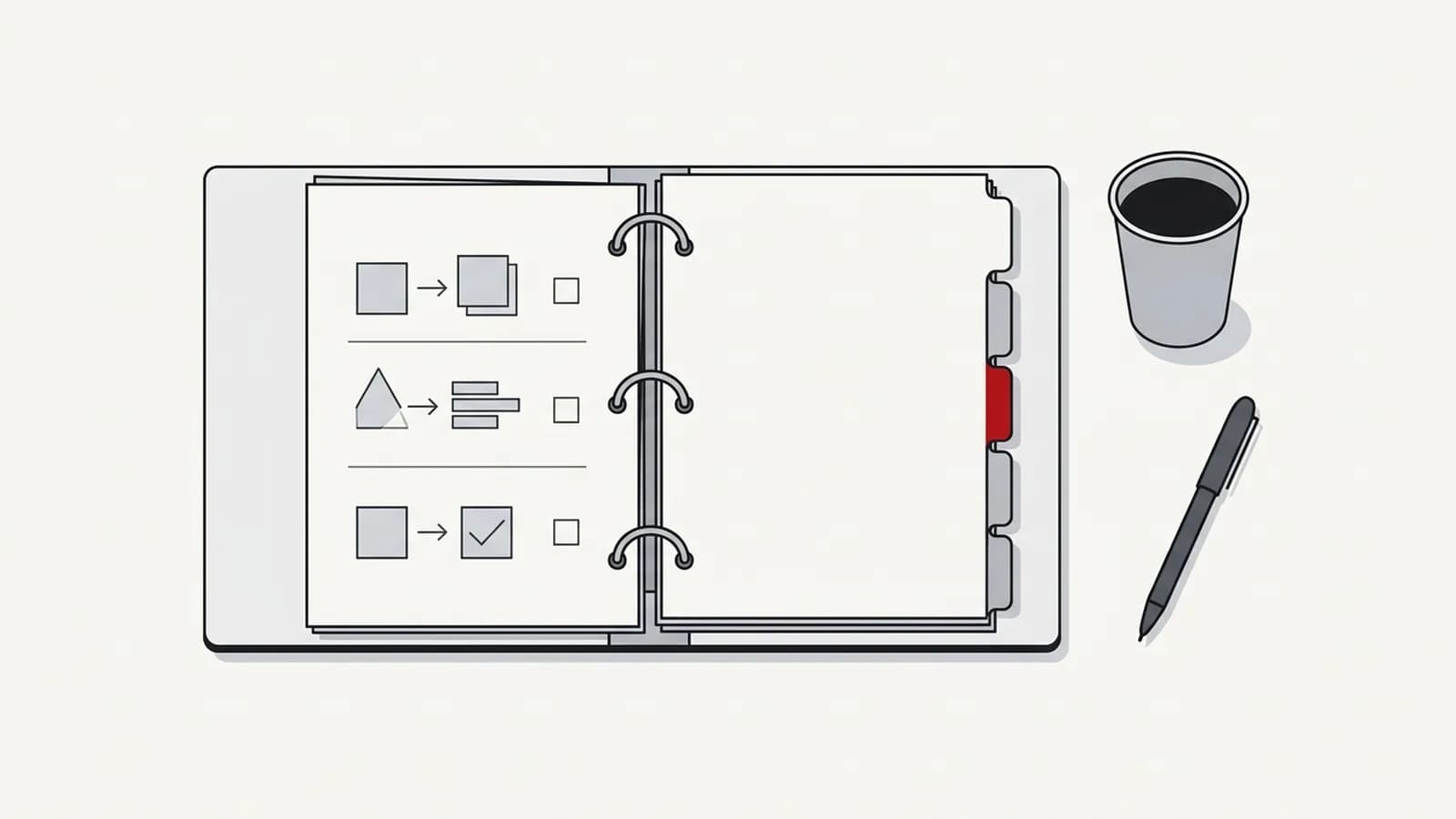
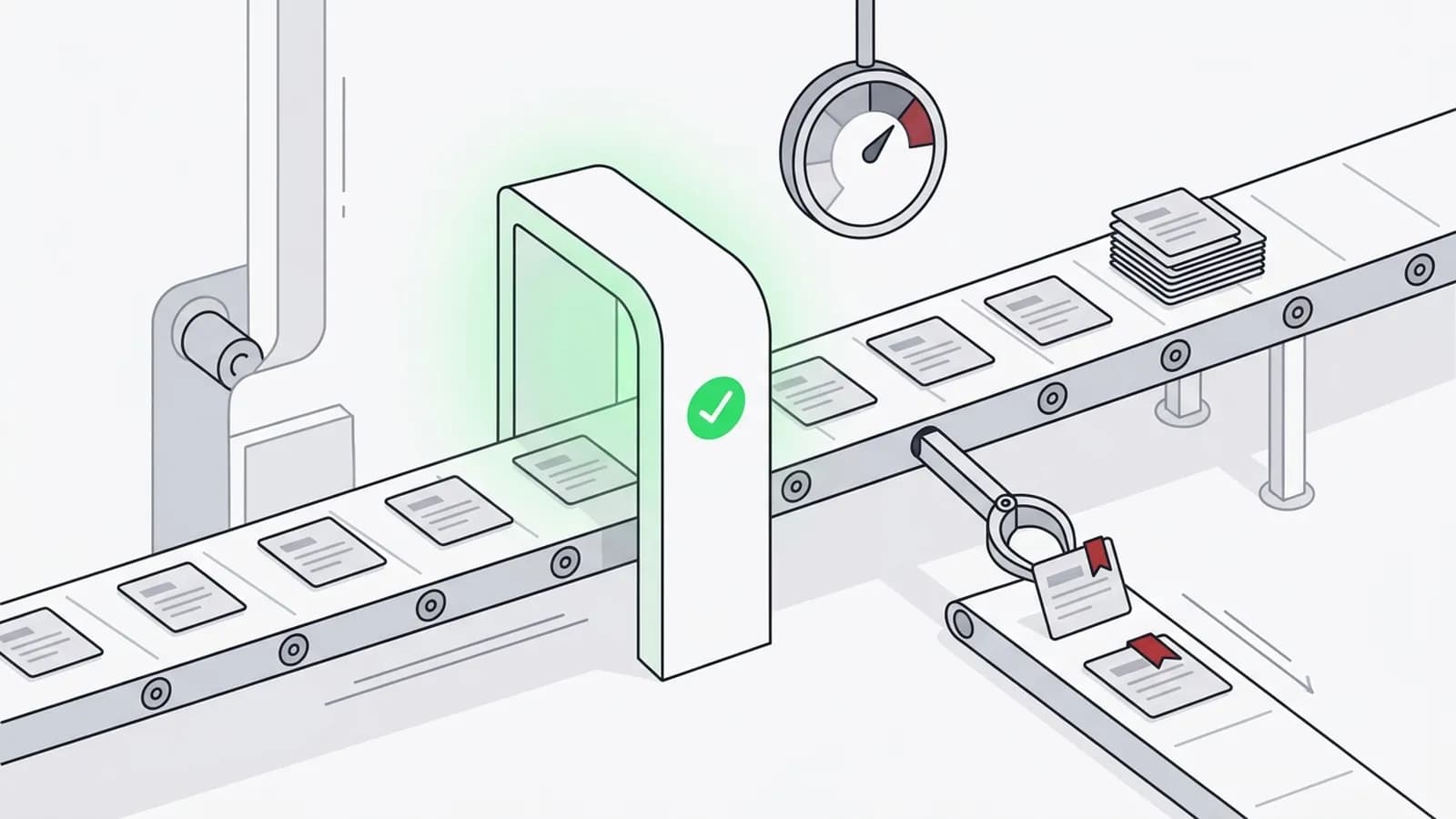
Scaling SEO without losing quality comes from a system of SEO quality assurance, not from hiring stars: documented SOPs for recurring work, a QA scorecard that samples delivered work against those SOPs, a root-cause coaching loop that fixes why errors happen, automated checks for the mechanical stuff, and a dashboard that makes quality visible. That system took execution quality from around 70% to 98% in an international operation I led.
Key takeaways
- SEO quality drops as teams grow because standards live in a few people's heads; documented SOPs make the standard independent of who does the work.
- A QA scorecard should weight criteria by impact and treat critical errors (such as a noindex on a live page) as automatic fails, regardless of the overall score.
- When the same error appears across several people, the SOP, training or tooling is wrong; fix the system first, then coach individuals.
- Automate mechanical checks like missing titles, broken links and schema errors so human reviewers spend their time on judgement calls.
- In one team I led, this approach took execution quality from around 70% to 98%; in a later leadership role, visible quality and clear ownership were central to lifting client retention from around 60% to 90%.
In this article (8 sections)
- 1Why SEO quality drops as teams grow
- 2What a scalable SEO process actually includes
- 3Step 1: Write SOPs for the work that repeats
- 4Step 2: Score delivered work with a QA scorecard
- 5Step 3: Fix the root cause, then coach
- 6Step 4: Automate the mechanical checks
- 7Step 5: Put quality on a dashboard leaders actually read
- 8When this is overkill
Every team scaling SEO hits the same wall. With three experienced people, the work is good because those three people are good. At fifteen, quality depends on who picked up the task. At fifty, clients notice the difference between accounts, and senior people spend their days fixing other people's work.
The fix is not more senior hires. It is a process and SEO quality assurance system that makes the standard explicit, checks work against it, and learns from every error. I have built that system twice: first as a Quality Analyst and then Team Leader on international campaigns, where execution quality went from around 70% to 98%, and then in a later leadership role, where client retention went from around 60% to 90%. This article explains how it works in practice.
Why SEO quality drops as teams grow
Quality problems at scale are rarely about effort. They come from structure:
- Knowledge lives in people's heads. New team members learn by copying whoever sits next to them, including their shortcuts and mistakes.
- "Done" means different things to different people. One person's on-page optimisation is a title tag; another's is a full rewrite with internal links and schema.
- Churn resets the clock. When an experienced person leaves, their standard leaves with them. This is one of the most common complaints clients have about agencies: the senior person pitched, and a junior did the work.
- Errors are found by clients. Without internal review, the first person to spot a broken redirect or a wrong-city page is the client, which is the most expensive way to find it.
None of these is solved by telling people to be more careful. They are solved by a system.
What a scalable SEO process actually includes
A working SEO quality system has five parts, and each one depends on the others:
- SOPs that define the standard for each recurring task.
- QA scoring that samples delivered work against those SOPs.
- A root-cause coaching loop that turns QA findings into fixes.
- Automated checks that catch mechanical errors before a human reviews anything.
- A quality dashboard that makes all of this visible to leaders every week.
Skip the SOPs and QA has nothing to score against. Skip QA and the SOPs quietly go out of date. Skip the dashboard and quality becomes something people only discuss after a client complains.
Step 1: Write SOPs for the work that repeats
Start with the tasks that happen every week or month: technical health checks, on-page optimisation, content briefs, internal linking, reporting and pre-launch checks. These cover most of the volume and most of the errors.
A good SOP is short. It states the purpose, the owner, the frequency, the inputs, the steps and a clear definition of done, with one example of good output and one of bad. If it runs longer than a couple of screens, nobody will read it during real work.
I have published a set of SEO SOP templates with this structure that you can adapt. The format matters less than two rules: every SOP has a named owner who keeps it current, and every SOP lives in one searchable wiki, not in scattered documents and chat threads.
Task SOPs sit inside a wider process. With my team, the Team Workflow & Task Delegation Process governs how work is assigned, handed over and tracked, so each task reaches someone who knows its SOP.
Step 2: Score delivered work with a QA scorecard
QA means a reviewer, ideally someone who is not the person's line manager, samples finished work and scores it against the SOP. In the teams I worked in, the QA role existed precisely for this, which meant quality had an owner rather than being everyone's vague responsibility.
The scorecard should weight criteria by impact and separate critical errors from minor ones. Here is a sample for on-page optimisation work. The weights are illustrative; set your own based on what actually moves results for your clients.
| Criterion | Weight | Pass standard | Severity if missed |
|---|---|---|---|
| Correct target page and keyword cluster | 15 | Matches the approved keyword map | Critical |
| Indexability (no noindex, canonical correct) | 15 | Page indexable, self-canonical or correct canonical | Critical |
| Title tag | 10 | Unique, includes primary term, fits display width | Major |
| Meta description | 5 | Unique, written for the click, no placeholder text | Minor |
| Headings and content | 15 | Answers the intent; H1 and H2s reflect the cluster | Major |
| Internal links | 10 | Links to and from relevant pages with descriptive anchors | Major |
| Structured data | 10 | Correct type, validates without errors | Major |
| Localisation (market, spelling, NAP) | 10 | Right market, spelling and business details | Critical |
| Task logged and documented | 10 | Change log updated, client-facing note written | Minor |
Two rules make this useful. First, any critical error fails the task, whatever the total score, because a wrong-city page with perfect metadata is still wrong. Second, the reviewer records which criterion failed and why, not just the number. The score tracks progress; the error log drives improvement.
Sample size matters too. Review more of a new team member's work and less of a consistently strong performer's. Increase sampling on any account or task type where scores drop.
With my team, this step is governed by the Quality Assurance (QA) Process, which sets who reviews what, how often, and how findings are recorded.
Step 3: Fix the root cause, then coach
This is the step most teams skip, and it is the one that moved quality most in my experience. When QA finds an error, classify why it happened:
- Knowledge gap: the person did not know the standard. Fix with targeted training, not a general reminder.
- SOP gap: the SOP was unclear, outdated or missing the case. Fix the SOP, then tell everyone what changed.
- Tool gap: the process relied on manual effort that a template, checklist or script could handle. Fix the tooling.
- Capacity gap: the person knew the standard but was rushing. Fix workload or deadlines; coaching alone will not help.
Then look at patterns. If one person makes an error, coach that person. If five people make the same error, the problem is the system, and coaching individuals just treats symptoms. In my own teams, much of the improvement came from updating SOPs and checklists based on recurring QA findings, then running short coaching sessions focused on each person's remaining error types.
The coaching side runs under the Training & Upskilling Process, which governs how knowledge gaps found in QA turn into planned training rather than one-off reminders.
Step 4: Automate the mechanical checks
Human reviewers are expensive and inconsistent at spotting a missing meta description across 400 pages. Machines are good at that. Automate anything that has a clear yes/no answer:
- Scheduled Screaming Frog crawls to flag missing titles, duplicate metadata, broken links, redirect chains and noindex tags
- Structured data validation on changed pages
- Python or Google Apps Script checks against the Search Console API for sudden drops in indexed pages or clicks
- Pre-publish checklists built into the task tool, so a task cannot be closed until required fields are complete
Automation does not replace QA. It removes the mechanical noise so reviewers can focus on judgement: is this the right page, does the content answer the intent, would the client be proud of it? Reporting is another obvious target; in a previous leadership role I automated more than 1,400 hours of manual reporting, roughly the workload of 10 team members, which freed that time for actual client work. My guide on which SEO tasks to automate covers how to choose, and I build these systems through SEO automation consulting.
Step 5: Put quality on a dashboard leaders actually read
Quality that is not visible will not be prioritised. Build one dashboard, in Looker Studio or your BI tool, that shows:
- QA score trend by team, task type and account
- Critical error count and the top five error types this month
- Delivery against plan (tasks due vs completed on time)
- Client-health signals: overdue deliverables, escalations, accounts with falling results
Review it weekly with team leads, and act on it. In an operation I led, combining visible delivery quality with clear account ownership was central to lifting client retention from around 60% to 90%, while running at a 24% cost-to-revenue ratio. The dashboard did not do that on its own, but it made problems visible early enough to fix them before clients noticed. If you want to build one, my Looker Studio SEO dashboard guide is a practical starting point, and the SEO organisation transformation case study shows the wider picture.
When this is overkill
Honest limit: a two-person team does not need a formal QA function. At that size, a shared checklist and peer review are enough. The full system pays off once you have several people doing the same type of work across many accounts or markets, or when client churn and rework are visibly costing money.
If that describes your team, this is the work I do as a marketing and SEO operations consultant, and for multi-market delivery through international and enterprise SEO consulting. Retention is often where the payoff shows first; I have written separately about SEO agency client retention.