GEO vs SEO vs AEO: What Actually Changes (and What Doesn't)
GEO vs SEO vs AEO explained by a practitioner: clear definitions, a side-by-side comparison, how to measure each, and how to run one strategy for all three.

Short answer
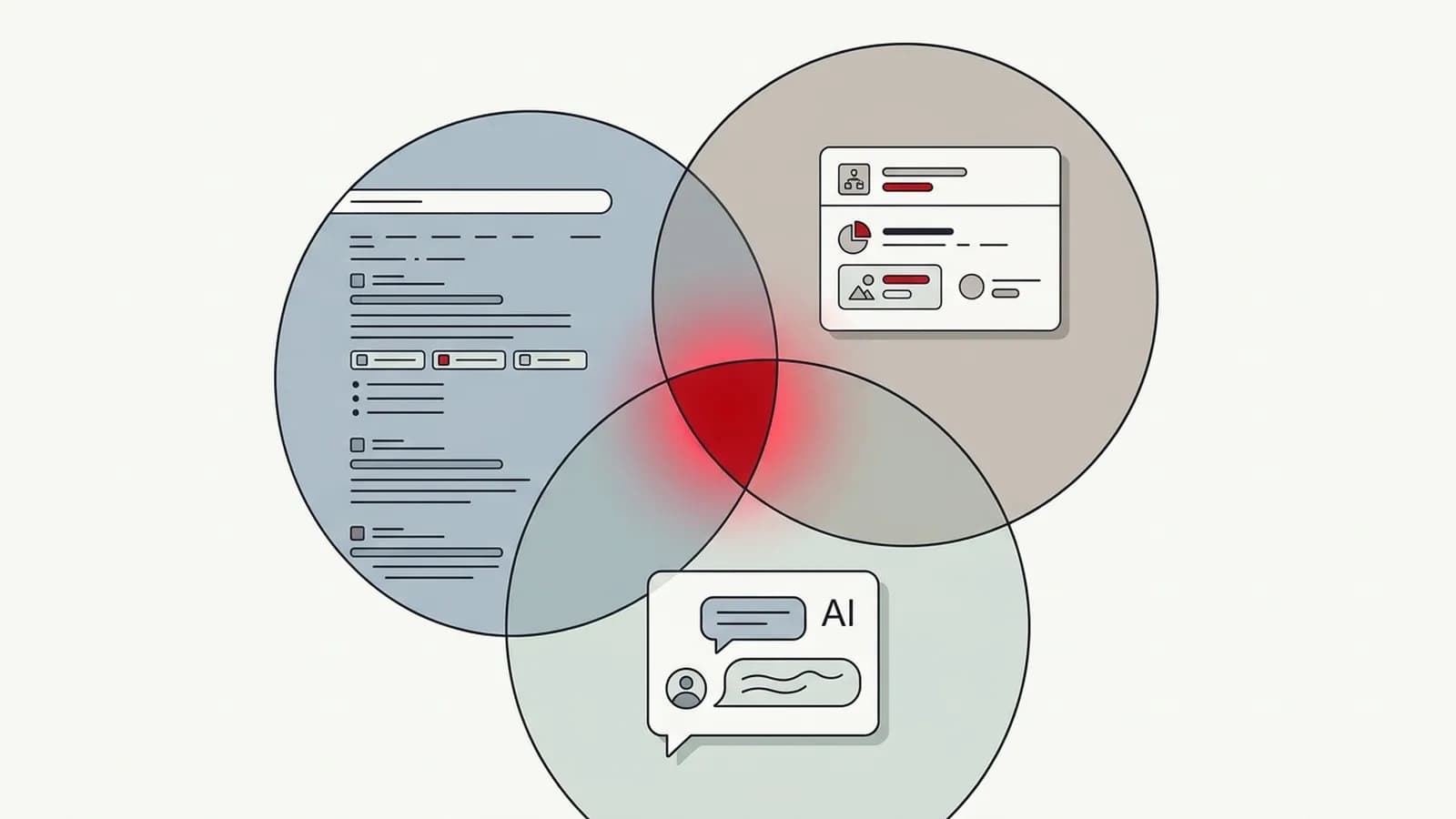
SEO earns rankings and clicks in search results. AEO (answer engine optimization) makes your content easy to lift as a direct answer. GEO (generative engine optimization) makes your brand mentioned, cited and recommended inside AI-generated answers from ChatGPT, Gemini, Perplexity and Google AI Overviews. GEO builds on SEO rather than replacing it, but adds entity, off-site and measurement work SEO alone does not cover.
Key takeaways
- SEO targets rankings and clicks, AEO targets extractable direct answers, and GEO targets brand mentions, citations and recommendations inside AI-generated answers.
- GEO is not SEO rebranded, but roughly the first half of any GEO programme is ordinary technical SEO and good content, because many AI answers are built from pages found through search indexes.
- The genuinely new work in GEO is entity consistency, third-party presence, accuracy correction and prompt-based measurement.
- Google states that AI Overviews and AI Mode have no special optimisation requirements beyond normal SEO best practice; the page must be indexed and eligible to show a snippet.
- Run one search strategy with three layers rather than three separate programmes: SEO foundation, answer-first page structure, and a monthly AI visibility check.
In this article (8 sections)
- 1What are SEO, AEO and GEO?
- 2GEO vs SEO vs AEO: side-by-side comparison
- 3Is GEO replacing SEO, or is it just SEO rebranded?
- 4How the AI platforms differ
- 5Do AI Overviews reduce traffic, and what should you do about it?
- 6How to plan one strategy for SEO, AEO and GEO
- 7What GEO cannot do (and when not to invest)
- 8Where to go from here
The GEO vs SEO debate usually generates more heat than light. Some people insist generative engine optimization is an entirely new discipline; others say it is SEO with a new label and a higher invoice. Both are partly right, and the useful answer sits in the detail: what each discipline is trying to win, which signals it relies on, and how you would know it is working.
This guide separates SEO, AEO and GEO properly, shows where they overlap, answers the "is GEO just SEO rebranded?" question honestly, and explains how I plan a single strategy that covers all three.
What are SEO, AEO and GEO?
Here are the definitions I use with clients, stripped of marketing language.
What is SEO?
SEO (search engine optimisation) is the work of earning visibility in traditional search results such as Google and Bing. It covers crawlability and indexing, content that matches search intent, site architecture, internal linking and enough authority from links and reputation to compete. The outcome is a ranking, a click and, ideally, a lead or sale.
What is AEO (answer engine optimisation)?
AEO (answer engine optimisation) is the work of making a direct answer easy to extract from your page. If someone asks a direct question, can a search engine or assistant pull a clean, correct answer from your content? The outcome is your text being used as *the* answer, in a featured snippet, a "People Also Ask" box or a voice result.
AEO grew out of featured snippets and voice assistants, and most of it is about how a page is structured rather than where it appears.
What is GEO (generative engine optimisation)?
GEO (generative engine optimisation) is the work of getting your brand mentioned, cited and recommended inside AI-generated answers from ChatGPT, Gemini, Perplexity, Claude and Google's AI Overviews and AI Mode. It asks whether an AI system knows who you are, trusts what it finds about you, and considers you relevant enough to name. The outcome is presence inside the answer itself.
That presence often comes without a click, which is why GEO needs its own way of measuring progress.
Other names you'll hear
You will also hear AI SEO, LLM SEO, LLMO (large language model optimisation) and AIO (AI optimisation). In practice they describe the same goal as GEO: being visible and accurately described in AI-generated answers. Buyers and providers use the terms interchangeably, so the label matters far less than the substance. When someone offers you AI SEO or any of the other variants, ask what they will measure, not what they call it.
GEO vs SEO vs AEO: side-by-side comparison
The table below is the comparison I walk through in almost every first conversation about AI search. The rows that differ most are signals and measurement.
| Dimension | SEO | AEO | GEO |
|---|---|---|---|
| Goal | Rank and earn clicks | Be the extracted direct answer | Be mentioned, cited, recommended |
| Where it shows | Blue links, local pack | Featured snippets, PAA, voice | ChatGPT, Gemini, Perplexity, Claude, AI Overviews, AI Mode |
| Core signals | Crawlability, relevance, links, intent match | Answer-first structure, clear formatting | Entity clarity, third-party mentions, citable specifics, accuracy |
| How to measure | Search Console, rankings, GA4 conversions | Snippet ownership, PAA presence | Mention, citation and recommendation rates from repeated runs of a fixed prompt set |
| Typical tactics | Technical fixes, content, internal links, digital PR | Question headings, 40–60 word answers, lists, tables | Consistent profiles, reviews, directories, publications, original data |
| Main risk | Ranking without converting | Answer given, no click | Wrong or outdated facts repeated at scale |
Two things stand out when you look at GEO vs SEO this way. First, AEO sits almost entirely inside SEO; it is a content-formatting discipline more than a separate channel. Second, GEO pulls in signals that live largely *off* your website, which is where most in-house SEO teams have the least control.
Is GEO replacing SEO, or is it just SEO rebranded?
This is the question I hear constantly from founders, usually with some suspicion attached. The honest answer has three parts.
GEO is not replacing SEO. Many AI experiences retrieve information from search indexes before generating an answer. Google has said plainly that there are no special requirements for AI Overviews or AI Mode beyond normal SEO best practice: the page must be indexed and eligible to show a snippet, and standard snippet controls such as nosnippet and max-snippet apply. You can read that in Google's AI features documentation. If your pages are hard to crawl, thin or badly linked, they are less likely to be used as sources anywhere.
A lot of what is sold as GEO is SEO. When I review GEO proposals, a large share of the line items are technical audits, content briefs and schema. That work is valuable, but it is not new. If someone quotes you a separate "GEO retainer" that duplicates your existing SEO work, ask what exactly is different.
But some of it is genuinely new. Classic SEO rarely tracked whether a third-party directory described your category correctly, or whether an AI assistant was telling buyers you had shut a product line down. GEO adds:
- Entity consistency across your site, LinkedIn, Google Business Profile, directories and author bios.
- Third-party presence on the review sites, publications, comparison lists and communities AI systems draw on.
- Accuracy management, finding and correcting wrong facts AI answers repeat.
- Prompt-based measurement, because there is no Search Console for ChatGPT.
So on GEO vs SEO: not a replacement, not purely a rebrand. It is an extension that shifts more weight onto reputation and consistency.
How the AI platforms differ
GEO is not one channel. Each assistant finds web information in its own way, which changes where the SEO foundation needs to be strongest. Kept deliberately general, because the details change often:
| Platform | Where it finds web information | What that means for you |
|---|---|---|
| ChatGPT search | Bing is among its search sources, alongside OpenAI's own crawler | Be indexed and visible in Bing as well as Google, and allow OAI-SearchBot |
| Perplexity | Searches the live web and shows its cited sources prominently | Pages need specific, current, crawlable answers worth citing |
| Gemini, Google AI Overviews and AI Mode | Google's search index | Google SEO and snippet eligibility come first |
| Microsoft Copilot | Bing | Verify your site in Bing Webmaster Tools and check Bing indexing |
When an assistant answers without searching, it relies on what the model learned in training, which is why consistent third-party descriptions of your brand matter on every platform. For one platform in depth, see how to rank in ChatGPT.
Do AI Overviews reduce traffic, and what should you do about it?
For informational queries, an AI Overview can answer the question before anyone scrolls to your link. Many site owners have seen clicks fall on "what is" and "how to" pages while impressions hold steady in Search Console. That pattern is worth checking in your own data before you panic or dismiss it.
What I recommend in that situation:
- Segment the loss. Compare clicks and click-through rate on informational pages versus commercial pages. The damage is usually concentrated.
- Rebalance the content plan toward comparison, pricing, implementation and "for [industry]" pages, where buyers still click to evaluate.
- Make informational pages earn a citation, with specific data, frameworks or examples an AI summary will reference rather than paraphrase away.
- Measure presence, not only clicks. A brand mentioned in the AI answer can win the enquiry later through a branded search.
There is more detail on this in my guide to optimising for Google AI Overviews.
How to plan one strategy for SEO, AEO and GEO
For most businesses I build one search strategy with three layers, not three programmes with three budgets. Running them separately wastes money and creates conflicting briefs.
Layer 1: SEO foundation. Technical health, indexation, a keyword and topic plan mapped to buyer intent, internal linking, and authority building. If this layer is weak, fix it first. My SEO audit checklist covers what to look at.
Layer 2: Answer-first page structure (AEO). Every priority page opens each section with a direct answer, uses question-style headings where they match real queries, and puts comparisons in tables. This costs almost nothing extra if it is built into the content brief from the start.
Layer 3: Entity and off-site work (GEO). One agreed description of the business, used everywhere; Organization or Person schema with sameAs links; a list of the third-party sources AI answers cite for your category, and a plan to be present and accurately described on them.
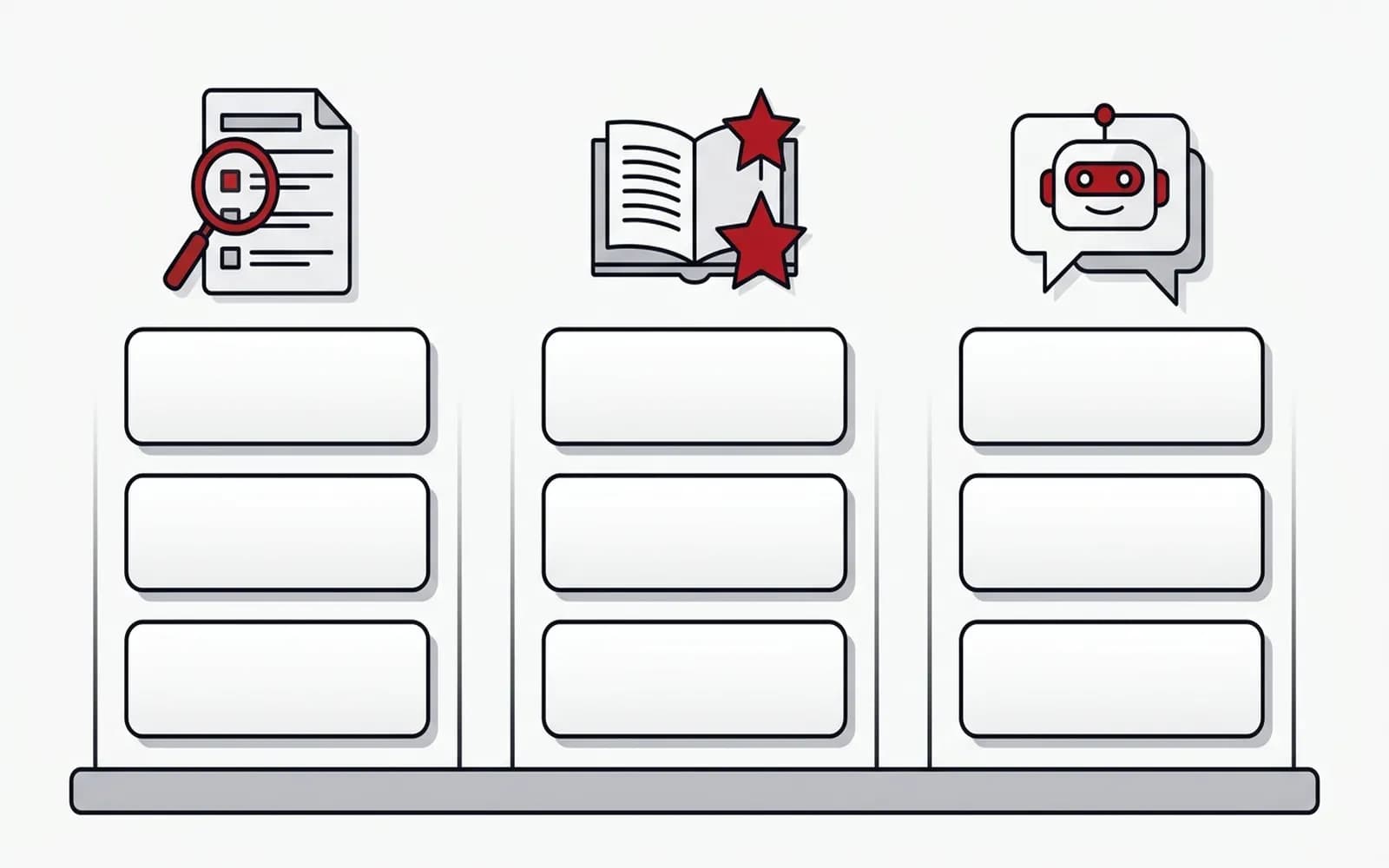
These layers map onto the Read–Know–Recommend framework I work to: the SEO foundation makes your site readable by AI (Read), answer-first structure and entity consistency give the model a clear, corroborated picture of you (Know), and third-party presence is what earns the recommendation (Recommend).
Across all three sits a single reporting view: Search Console and GA4 for search performance, plus a monthly prompt-set check for AI visibility, with each prompt run several times.
A simple prioritisation rule
If budget forces a choice, I usually sequence it like this:
| Situation | Where to start |
|---|---|
| Site has indexing or technical problems | SEO foundation first |
| Ranks well but AI answers ignore you | Entity consistency and third-party presence |
| AI answers mention you with wrong facts | Accuracy correction at the source |
| New brand with little footprint anywhere | SEO and content, then off-site mentions |
What GEO cannot do (and when not to invest)
No one can guarantee placement in ChatGPT, Gemini or AI Overviews. Answers vary by wording, user, location and date. Anyone promising a fixed position is either misunderstanding the technology or selling something they cannot deliver.
GEO also cannot compensate for a weak product or a thin reputation. If real customers are not talking about you anywhere, the job is marketing and service quality, not optimisation.
And if your buyers do not use AI assistants to research your category yet, a heavy GEO programme is premature. Run a baseline check, keep your SEO strong, and revisit in six months.
Where to go from here
If you want to see where you stand, start by measuring. My guide on how to measure AI search visibility explains the prompt-set method, and how to rank in ChatGPT goes deeper on one platform.
If you would rather have it done properly, my GEO consulting work sits on top of the same foundations as my SEO consulting, so you get one plan rather than two competing ones.